How to Go Off-Grid for 14 Days: A Complete $2,500 Backup Power System Guide
Table of Contents
Understanding Winter Weather & Extended Grid Failures
Severe weather events and Super El Niño patterns have increasingly stressed regional power grids. When infrastructure fails in freezing temperatures, power outages can stretch from hours into multiple weeks. During a prolonged blackout, municipal water pumps, refrigerators, home heating systems, and medical devices all fail simultaneously unless you have an independent off-grid power supply ready to deploy.
The $2,500 Power Station Solution
Modern high-capacity portable power stations offer incredible versatility compared to traditional gas generators. Units like the Pecron F5000 provide massive energy storage capacity and robust continuous output without the noise, fuel storage hazards, and carbon monoxide risks associated with traditional gas-powered engines.
Key Advantages of Portable Power Stations:
- Quiet Operation: Can be run indoors or in enclosed spaces safely without deafening engine noise.
- Modular Scalability: Easily expandable capacity to match your exact run-time requirements.
- Solar and Grid Rechargeable: Seamlessly integrates with solar panels for infinite off-grid replenishment.
Integrating Power Stations Into Your Main Electrical Panel
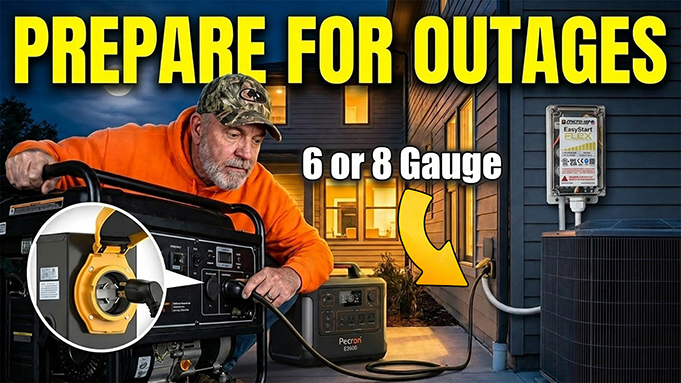
Running extension cords through windows is inefficient and unsafe during a major storm. To power your home properly, you should integrate your backup power source directly into your electrical panel using an interlock switch and a proper inlet box.
Crucial Safety Rules for Panel Integration:
- Neutral Bonding: When connecting portable power stations or generators to your home panel via a manual transfer switch or interlock, ensure your setup adheres to proper grounding and unbonded neutral guidelines depending on your specific system architecture.
- Professional Installation: Always consult a licensed electrician or follow strict local electrical codes when installing transfer switches and 30-amp or 50-amp inlet boxes.
Smart Energy Management: HVAC & Water Heaters
To stretch a $2,500 backup power system across a 14-day grid-down scenario, you cannot simply run every appliance in your house simultaneously. Strategic load management is the secret to survival:
- Electric Water Heaters: Water heaters consume massive amounts of electricity. Instead of leaving it on continuously, power your water heater for roughly 30 minutes a day to maintain hot water for showers and cleanup without draining your battery reserve.
- HVAC and Heat Pumps: Heating and cooling systems draw high starting surges. Ensure your heat pump or AC compressor is equipped with a soft-start kit to drastically lower inrush current and protect your power station from tripping under heavy inductive loads.
Frequently Asked Questions
Can a $2,500 power station run an entire house?
It cannot run heavy simultaneous loads like a central air conditioner, electric dryer, and oven all at once. However, with disciplined load management—cycling high-draw appliances and focusing on essentials like refrigerators, lights, Wi-Fi, well pumps, and heating blowers—it can easily sustain a household for 7 to 14 days.
How do I recharge my power station during an extended outage?
You can replenish your system using portable solar panel arrays, vehicle charging ports, or by pairing the power station with a small, efficient inverter generator running for limited windows during the day.