Before You Buy a Robot Lawn Mower
See the Brand New Robot Lawn Website → LawnRobotMowers.com
The robot lawn mower industry is booming, promising a future of effortless, hands-free lawn maintenance. But behind the sleek marketing videos and high-tech promises lies a more complicated reality. After extensive, real-world testing of the latest autonomous mowers on the market, it’s clear that the technology isn’t always as “set-and-forget” as brands claim. Before you drop thousands of dollars on a robotic mower, you need to understand the hidden flaws, technical limitations, and mechanical traps that can turn a smart investment into a frustrating headache. Here is a deep dive into the current state of the robot lawn mower industry.
Current Best Choice for Robot Mowers…
TWO WAYS TO BUY…
Click the pic to buy on Amazon
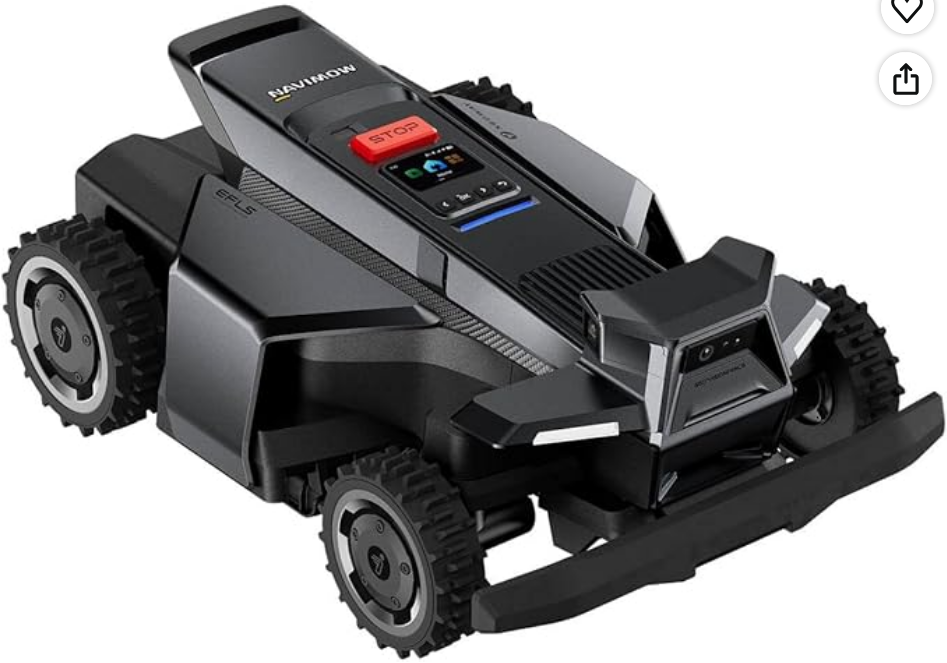
Or buy direct from them here → Navimow Website
(Look for the 450 model.)
Segway Navimow X450 AWD Core Features
- Recommended Mowing Capacity: Built to handle larger, more demanding properties up to 1.5 acres in size.
- Advanced All-Wheel Drive (AWD): Equipped with a 4WD system, dual independent steering motors, and dual independent suspensions to cross obstacles up to 2.8 inches and climb steep slopes up to 84% (40 degrees).
- Xero-Turn Steering: Features a turf-safe, zero-turn design using eccentric front-wheel control to prevent grass scuffing, tearing, or soil displacement during tight pivot maneuvers.
- Elite Positioning Stack: Operates completely wire-free using tri-frequency Network RTK (NRTK), 360-degree VSLAM vision mapping, and Visual-Inertial Odometry (VIO) for centimeter-level accuracy.
- Hands-Free Auto Mapping: Eliminates manual perimeter walking with one-tap, real-scene auto-mapping paired with GeoSketch in-app map editing.
- VisionFence Panoramic Obstacle Avoidance: Uses a 360-degree RGB camera and Time-of-Flight (ToF) sensor to dynamically identify and navigate around more than 200 distinct obstacle types, including yard debris, animals, and toys.
- High-Capacity Dual-Disc Cutting: Packs a heavy-duty cutting deck powered by two 180W high-performance motors, giving it a wide 17-inch cutting path with automatic height adjustment ranging from 0.75 to 4 inches.
- Extensive Multi-Zone Management: Built with massive on-board memory to easily map and manage up to 120 distinct zones, connected channels, and off-limit islands.
- All-Weather Reliability: Features robust IP66 dustproof and waterproof ratings alongside an intelligent rain sensor that cross-references local weather forecasts to protect wet turf.
- Quad-Layer Smart Security: Offers piece-of-mind anti-theft tracking via built-in GPS tracking, cellular connectivity, lifting/tilting sound alarms, PIN code restriction, and Apple Find My support.
1. RTK vs. Network RTK (NRTK): The Battle for Navigation
Modern wireless robot mowers have largely abandoned the old-school underground perimeter wires in favor of satellite navigation. However, standard GPS isn’t precise enough to keep a mower on your lawn and out of your flower beds. That’s where RTK (Real-Time Kinematic) technology comes in, providing centimeter-level accuracy.
Currently, the industry is split between two primary navigation methods:
- Standard RTK (Local Base Station): This system uses a physical base station that you install on your property. It establishes a direct, local 1:1 pairing with your specific mower. Because it’s a localized signal, it is highly reliable and doesn’t rely on an internet connection, though it requires a clear line of sight to the sky.
- Network RTK (NRTK): Instead of a physical base station on your roof or yard, NRTK utilizes a network of cellular-connected reference stations. While this eliminates the need to install hardware on your property, it introduces a major point of failure: it requires a constant, uninterrupted cellular data connection. If your local cellular network drops or the brand’s server experiences latency, your mower loses its positioning and stops in its tracks.
2. Acreage Limitations and Mapping Boundaries
One of the biggest pitfalls for buyers is relying strictly on the acreage rating listed on the box. A mower rated for “up to 2 acres” often assumes a perfectly flat, square, unobstructed lawn. In reality, complex landscapes dramatically reduce a mower’s actual capacity.
When dealing with large properties, mapping boundaries and memory limits become a significant bottleneck. Every tree, driveway, flower bed, and outbuilding requires creating “exclusion zones” or “islands” within the digital map. Complex properties with multiple distinct zones require massive amounts of spatial data. If a mower’s internal processing or cloud mapping software hits its storage limit, you won’t be able to map your entire yard, regardless of what the acreage rating promised.
3. Real-World Case Study: The Lymow Experience & Overheating
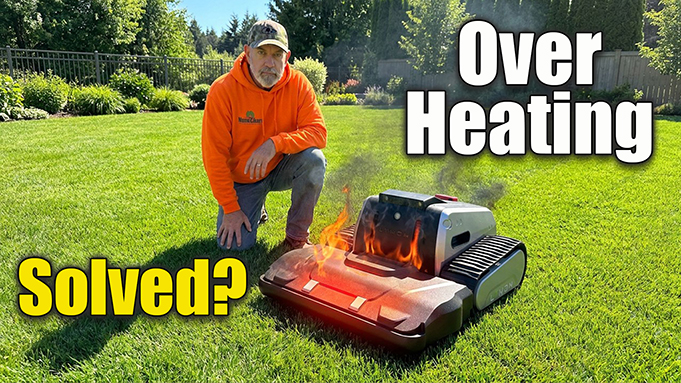
To understand the current limits of the industry, look no further than real-world stress tests. Testing units like the Lymow One Plus reveals how cutting-edge hardware handles brutal summer conditions. While these machines boast incredible build quality and innovative track systems, intense heat exposes a common industry flaw: thermal management.
When running high-torque motors under direct sunlight and heavy workloads, internal temperatures can spike, triggering automatic thermal shutdowns to protect the battery and mainboard. If you are experiencing overheating issues with a high-performance robot mower, use these practical tips:
- Adjust Your Mowing Schedule: Shift your active mowing windows to early morning or late evening when ambient temperatures are lower and direct solar radiation is minimized.
- Manage Solar Charging Rest Steps: Keep in mind that heavy charging puts additional thermal load on the internal batteries. Shading your charging station can drastically lower baseline temperatures before the mower even starts a cutting cycle.
4. The Razor Blade Trap: The Danger of Aftermarket Blade Modifications
Almost all residential robot lawn mowers use a disc system equipped with small, free-swinging razor blades rather than a massive, rigid steel blade found on a traditional gas zero-turn. To some homeowners, these tiny razor blades look weak, leading to a tempting but dangerous DIY trend: modifying robot mowers to spin real, heavy traditional lawn mower blades.
Doing this is a recipe for mechanical disaster for several reasons:
- Motor Strain and Electrical Overload: Robot mower motors are precisely engineered, low-wattage brushless systems designed specifically for the low resistance of tiny razor blades. Forcing them to spin a heavy steel blade dramatically increases rotational inertia, drawing excessive current and frying the electronic speed controllers (ESCs) or burning out the motor windings entirely.
- Severe Battery Drain: The massive energy draw required to spin heavy aftermarket blades will cut your runtime in half, causing the mower to spend more time tracking back to the charging dock than actually cutting grass.
- Safety Hazards & Vibration: Traditional blades require massive structural support. Modifying a lightweight polymer disc to hold a heavy steel blade introduces severe kinetic imbalances. A single strike against a root or rock can shatter the cutting assembly or turn the blade into a dangerous high-velocity projectile.
Final Verdict: Know Before You Buy
Autonomous lawn care is absolutely the future, but the industry is still navigating its growing pains. Success depends heavily on choosing the right navigation type for your property, respecting the software mapping limits of your machine, ensuring your hardware can handle local weather extremes, and leaving the cutting geometry exactly how the engineers designed it. Watch the full video breakdown above to see these systems in action before making your decision!